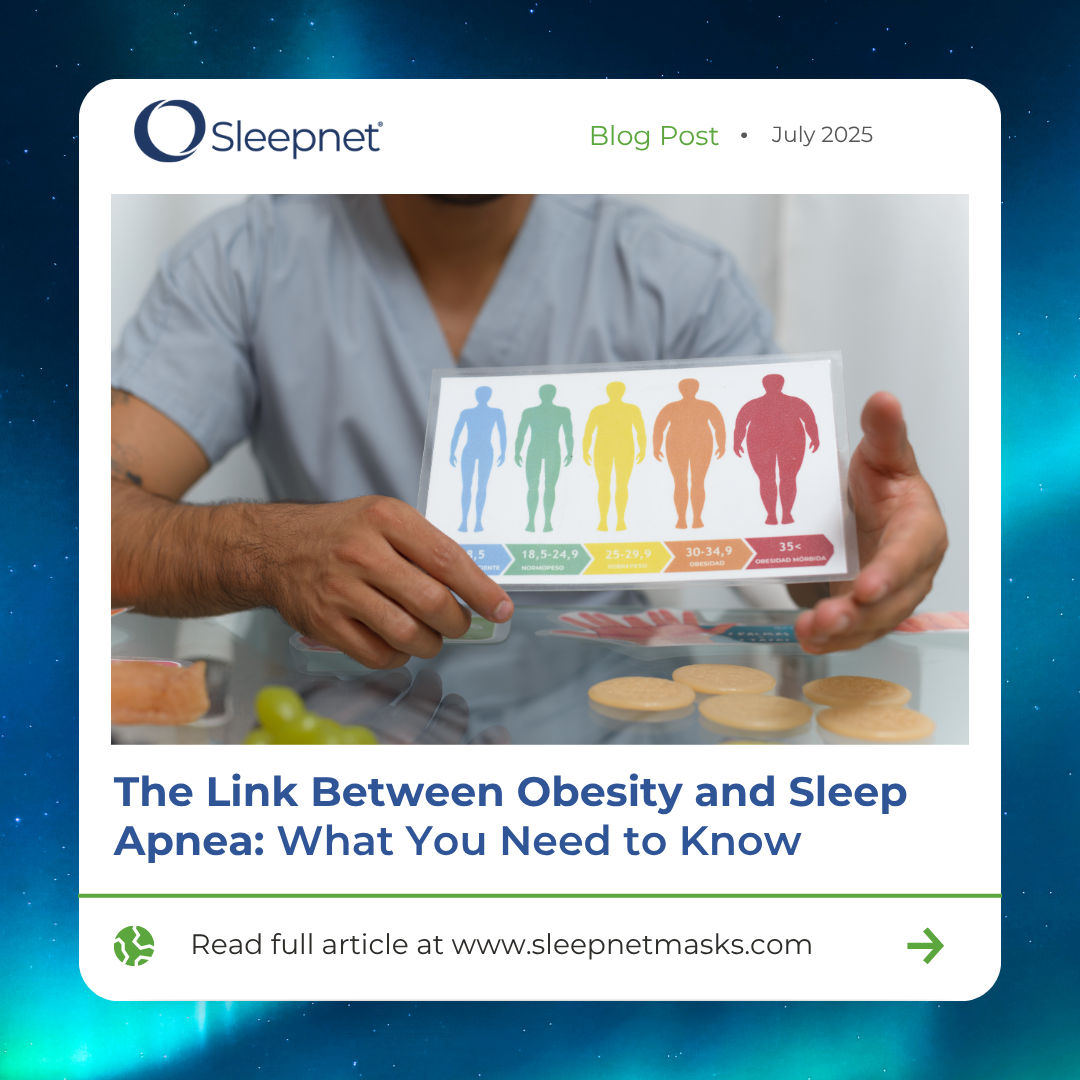
The Link Between Obesity and Sleep Apnea: What You Need to Know
When we think of sleep apnea, we often focus on the symptoms; loud snoring, daytime fatigue, and repeated pauses in breathing. Treatment options like CPAP masks are often discussed. But how often do we stop to ask: What actually causes it?
Understanding the Root Causes
Sleep apnea doesn’t have a one-size-fits-all cause. For some people, it can be the result of enlarged tonsils blocking the airway. Others may experience chronic nasal congestion or worsened symptoms after drinking alcohol before bed.
But one of the most common and rapidly growing contributors to sleep apnea? Obesity.
Obesity: A Leading Risk Factor
It’s no secret that obesity is a rising concern in the United States. About 70% of U.S. adults are classified as overweight or obese (USA Facts 2023, “US Obesity Rates Have Tripled Over the Last 60 Years”). That’s three out of every four people—a staggering number that also mirrors the growing prevalence of obstructive sleep apnea (OSA).
Studies show that:
- People with obesity have a 60% to 90% chance of developing sleep apnea, depending on their BMI and fat distribution, particularly around the neck and upper body.
- Among obese individuals, 62% of men and 20% of women have moderate to severe sleep apnea.
- An increase of just 10% in body weight can raise your risk of developing sleep apnea by up to six times.
(Sleep Foundation 2024, “How Weight Affects Sleep Apnea).
Why the Link Is So Strong
So, what exactly is it about excess weight that contributes to sleep apnea?
Here’s what’s happening behind the scenes:
- Fat tissue around the neck (called pharyngeal fat) narrows the upper airway, especially during sleep when the muscles are already relaxed.
- Increased abdominal fat puts pressure on the diaphragm, making it harder for your lungs to expand fully while lying down.
- Chronic inflammation caused by obesity can impact airway stability and respiratory function.
(Sleep Foundation 2023, “Is Sleep Apnea Genetic?”)
This combination restricts airflow during sleep, which is why snoring—the sound of air being forced through a narrowed airway—is one of the most common symptoms of sleep apnea.
Sleep Apnea and Weight: A Vicious Cycle
Obesity can cause sleep apnea but sleep apnea can also make it harder to lose weight. Poor sleep quality impacts hormones that regulate hunger (like ghrelin and leptin), making you feel hungrier and less satisfied. Add daytime fatigue to the mix, and it becomes more difficult to maintain an active, healthy lifestyle.
This creates a feedback loop:
Obesity → Sleep Apnea → Poor Sleep → More Weight Gain → Worse Apnea
Can Weight Loss Help?
Yes, weight loss has been shown to significantly reduce the severity of sleep apnea in many people. Losing just 10% to 15% of your body weight can reduce the severity of OSA by up to 50% (Sleep Foundation 2024, “How Weight Affects Sleep Apnea).
However, weight loss alone doesn’t always fully resolve sleep apnea. Many individuals still require ongoing therapy, such as a CPAP machine and mask, or even surgery in more complex cases.
How Sleepnet Supports Your Journey
If you’re living with sleep apnea, you’re not alone—and you’re not stuck. Whether you’re working on weight management or simply looking for a more comfortable solution, Sleepnet’s range of soft-sealing, adaptive masks helps patients breathe better and sleep deeper.
Our AIR°gel® technology provides a secure fit with less facial pressure, making therapy more tolerable for individuals with fuller facial features, beards, or varying body sizes.
Take the first step toward better sleep, better health, and a more energized life.
Visit sleepnethealth.com to explore our mask options and find the right fit for you.